Disability Connections Blog
From your perspective/experience how is disability perceived in the Philippines both invisible and physical? Has this shaped your way of perceiving disabilities? Has this impacted your identity?
“In the Philippines, disability is perceived as something that is more work of the evil rather than it being more common and medical. Therefore, people with disabilities in the Philippines are belittle or are seen as a baggage from their family because in the Philippines there are no job opportunities nor rights for people with disabilities therefore, majority of them are poor, homeless, in the streets for some of them are neglected by their family especially the government. Additionally, because the Philippine is very poor our medicine is not as advanced as here in the U.S. and people who can go to hospitals are rich people who can afford them and yes there is little to no health insurance. Due to this people with disabilities there, can’t even get proper medical examinations so the majority of them just go through with it individually on their own. Due to the fact that the government is not prioritizing people with disabilities, it’s rare for public transportation or places to have accommodation for people who are wheel-chaired or are needing accommodations. I think because of this I rarely see them during the time I spent in the Philippines and sadly, I thought this is what is acceptable before getting to higher education and going here in the US.”
-Jan
“ Disability is deemed to be a deficiency in the Philippines. They are often looked down as incapable or lacking thereof. After moving to the United States, I learned to be independent as much as I can regardless of my abilities. So, after visiting the Philippines for more than a decade, I was in better words uncomfortable by the constant stares coming from my own community. It is often people with disabilities in the Philippines who are bed ridden or have no health insurance. They don’t have the same rights as an able-bodied person has. I had to continue to prove to others that I can advocate for myself if I truly need the help. With that being said, I definitely will say how privileged I am for having the resources I have right now, because I know that there are some who hope to live as independently as they can with the accommodations that the country lacks for decades. They want to go get a job, do activities they don’t really have to think prior to being assisted, or commuting as freely as they can where the people in United States have.”
-Lorie
How do you think Asian culture conflicts with disability identity? How do you think it might help?
“I think Asian culture conflicts with disability identity a lot because it is still seen as a taboo, we see people with disabilities that identify as Asian to be having a hard time within and outside of the community. Take mental health for example this is still something that is not talked about in the Asian community for this is seen as an embarrassment or a special case that people within their own families are the only ones allowed to know this thing. However, if we start normalizing disability identity and mental health there wouldn’t be individuals within the Asian community feeling silenced. Therefore, I think our generation really needs a lot of courage to break these traditions and normalize it.”
-Jan
“It has always been a conflict of Asian culture and disability identity. Whether someone may have a physical or invisible disability, it is a taboo to even speak of the struggles we face. We have to be a model minority where we are perceived to work hard and be strong no matter the circumstance. And, I think it is a shame and cruel to allow the intersectional parts of our identity conflict with each other. It shouldn’t be an identity against the world.”
-Lorie
How have the recent attacks in the Asian community affected you personally?
“Personally, I think it is still a privilege that I am not what most oppressors will see to be assaulted physically in the public. But I have been more cautious and aware ten times more than I did back when COVID-19 broke out early March of last year. I have been followed more often, have received racial slurs, and there were incidents when I am in public buses or places where a person will not spit directly at me but close to where I am standing or sitting. I have also been accused of being of a specific Asian descent/ethnicity and had been accused that “I made the virus” and the saddest part about this incident was that I received this comment in the spaces of the UW building where current workers just yelled at me due to my race. Additionally, I think the reason why I am facing these incidents is because not only am I an Asian, but I am also a female which most people see as easy to target, especially verbally. I am more concerned about elderly people like my mother who are more likely to be attacked due to the patterns we have been seeing to be targeted in the Asian community, so I have been communicating with her often to make sure that nothing tragic has happened to her.”
-Jan
“As.a disabled person, I was always cautious of my surroundings. I know I’m not as strong-willed anyway, especially at night because of my disability. But, as the attack towards the Asian community, I have become more aware and sometimes scared to walk around even more. I have heard people yelling, “STAY 6 FEET AWAY!” I’ve been followed at night, and been slurred out in daylight. But, although this may be true, I’m also concerned for the elderly because of the fact that they have a greater risk of being attacked. Most of the elderly are first generation immigrants who speak little or no English. Also, don’t forget the stereotypes given towards us.”
-Lorie
“With the recent onset of attacks towards the Asian community, I have felt those attacks to be a lot more personal. I come from a background where I was adopted into a white family, thus race was never a prominent part of my identity. I have had the privilege to be treated as my white family members are when I am with them, but with the attacks I realized that it doesn’t matter ‘how’ I identify when it comes to my race, it doesn’t matter how much I know about my home country, and it doesn’t matter what I do versus not. I am always on the outside at the very least a Chinese woman and that is how other people will treat me. I have been more interested in learning about Asian American History and the discrimination they have faced through different policies and stereotypes. I find it hard to watch the violence caught on camera especially of the elderly when they simply were just minding their own business. Last year one incident of verbal harassment against an asian teenager, made national headlines in a park that I would go to every weekend and walk through to go home from school. It became very personal very fast and that took me off guard. Sometimes I still feel very removed from the situations, but it has opened my eyes to different types of activism and how it impacts other minorities.”
-Grace
What do you think needs to be done moving forward to address the racial issues in the country?
“I think there’s a lot to be done. It is especially harder I think for the Asian community to fight this problem of racial discrimination for we have been labelled and seen as “Model Minorities.” Additionally, what is more problematic is that the country has not been aware that there are many ethnicities within the Asian community but only three common ethnicities are known by the masses which is really frustrating because this influences media coverage. Also, the Asian community needs to be louder and not simply accept the racism we are currently facing therefore I say keep the noise going and make this even bigger because we matter. Though, I think the most important thing is to educate people that OUR RACE IS NOT THE VIRUS.”
-Jan
“It takes a conversation and allows Asian voices to be heard. I’ve seen the Asian community in a group with other ethnicities and be mute towards their thoughts and opinions. If you observe the room that speaks about racial equity, you are most likely to hear every race besides Asians. Therefore, I believe that they need to be given space and opportunity to speak regardless of where they are.”
-Lorie
“I think in addition to what was already said, I think we also need to reframe how we teach in schools about others’ history and cultures. The way in which we learn about it currently is very surface level without touching on the effects it has had on different communities. I think a lot of what is taught tends to reinforce stereotypes of those groups without taking into consideration the damage that can be done through that and limiting inclusion throughout our education. I also agree that when we think of minorities or minorities are discussed in the news there are often times when Asian individuals, ideas, opinions, thoughts, or voices are not taken into consideration. One way to address that is through providing more safe spaces for these types of discussions and normalizing the conversations.”
-Grace
Have you experienced discrimination before? (i.e. as a woman, asian person, or disabled individual)
“Yes, as an Asian immigrant who speaks a native tongue of Tagalog, I have been discriminated against for how I sound when I speak and have been questioned for my abilities. This happened not only when I was in school and received comments from my teachers. But I have experienced it here in UW in various places by various people, in my work in the past, and everything that I am currently involved myself with. I think minoritized communities not only Asians will always be seen as a threat therefore I think receiving discrimination will never stop until there’s a change from the grown up from this country for what we most experience is institutional racism.”
-Jan
“Yes, I have. As a disabled Asian woman, I have been discriminated against in all parts of my identity. Whether I was in primary school or higher education, I had to fight for who I am and what I’m capable of. Regardless of age, the Asian community and other minority groups will be looked down upon as unworthy of being wherever they go.”
-Lorie
“Despite having written this question, I find it hard to answer personally. I think there are different levels for thinking of discrimination for example some is systematic, while other incidences happen between you and a stranger. When I think of discrimination, I think of it as using a part of my identity against me. Personally as a disabled woman and based on my definition I provided I have blatantly been treated differently because of my disability especially since coming to UW, maybe I’m just noticing it more, but it seems to be more apparent.”
-Grace
April marks Sexual Violence Awareness Month
April 28th is Denim Day
May marks Mental Health Awareness Month
When I originally thought about reporting what happened to me to my University, I knew that it was not going to be easy, but I definitely underestimated just how hard it would be. Originally, I was afraid to speak up because it is hard to know what else is “worth” reporting when you only see the most extreme cases in the media. In my case, I had clothes on, presumed to be asleep (but wasn’t), and I was not physically harmed, but it wasn’t consensual, and it wasn’t something I wanted which was communicated prior. My mental and emotional health had never gotten to such a low point. I felt and still feel very ashamed for what had happened to me, I was embarrassed to tell anyone especially my dad, I felt guilty, a burden to those around me, I blamed myself (which I had never done prior to the investigation) and would cry to myself saying I deserved it and thinking other people blamed me too, I was lonely, scared, I had never felt that ugly inside or out ever, I was disturbed remembering what happened and events that followed. Gradually the defense tried using my mental health against me. They would say that I always had and always would have problems regardless of the situation and that I was emotionally unstable. In January, I had a mental breakdown and a psychotic break where I was looking into in-patient care facilities because I was in so much pain. My dad had to watch me for a few days straight to make sure I didn’t put myself in danger and I gave him anything I could harm myself with. There were times I wanted to relapse or take my life not because I didn’t want to live, but because I didn’t want to continue living with the symptoms I was experiencing. I developed complex PTSD as a result, another thing that you see a list of symptoms and go “wow that sucks”, but I didn’t realize how debilitating it was until I would go weeks reliving what happened. I would have visual and somatic hallucinations where I physically would feel it happen again. When I was having extreme difficulties with the case and considered ending it early to protect myself, despite having my statement, the perpetrators statement, and my evidence they refused to make a report. I also wasn’t notified he provided evidence, but he was able to access my evidence (without my awareness) and comment on it as part of his testimony. I utilized chat lines, crisis numbers, my therapist, psychiatrist, and other resources. He was ultimately found responsible for both assault and harassment. I’m doing better and continue to process everything that happened, but I also feel lighter and happier with myself and more confident in knowing people care and support me.
A big part of why I share this is not to deter anyone else from reporting, but rather to share and be honest in what I went through regarding my mental health and how it shifted through the whole experience. That is not to say everyone goes on to develop a disorder, but that it is also a very real experience. Talking in detail about these cases aren’t easy and that’s why they usually are not. discussed A lot of this was already pre-written when I wanted to communicate to my family and closest friends what was going on. I think what administration, law makers, investigators, and faculty don’t always understand is that I was expected to be a student at the same time. No one knew I was going through this unless I disclosed it. I don’t recall ever being asked about any accommodations needed for the investigation at any point and clearly when I needed help they didn’t, other than telling me if I stopped the case then nothing would happen. I survived an experience that I wouldn’t wish on anyone including institutional betrayal before, during, or after the investigation.
Grace Henneford
I was first public with my mental health struggles when I was thirteen. At the time no one was talking about depression or anxiety, self-harming or suicide, how it impacts us and those around us, or even that it just existed. Staying silent about our mental health and those around us was normal. I remember learning that friends had talked about going through unfamiliar experiences related to their mental health, but that they felt alone because no one ever really talked about their experiences with mental health. I started to make posts on my social media sharing my journey with self-harm, depression, and experiences with suicidal ideation.
I wanted to speak up because I wanted to be honest, not only with those around me but also with myself. Life isn’t perfect and I didn’t want my social media to portray that. As we grow, we experience more and more but don’t always know why and I feel like by sharing my experiences, my mental processes, feelings, and thoughts it would allow others to gain a sense of where I’m coming from but also see if something within that resonates with them. When I went through depression for the first time, I felt alone as many people do and I felt even more alone with so few people acknowledging that it was a thing. At that time, if you talked about mental health or self-harm people assumed you were doing it for attention, but I wanted to from the very beginning and was clear that I wanted to ensure someone out there knew they weren’t alone. Once I graduated high school, I reached out to old classmates I was never overly close with and got to know them better. People who I still would never have imagined opened up to me with their experiences with anxiety and self-harming. I could tell people knew they weren’t alone when more and more commented on my posts or sent me private messages. I acknowledge and want to recognize that not everyone is in a part of their journey where they feel safe or empowered to speak up and that those feelings come and go. I think you can go through life and it is okay that someone doesn’t speak publicly, for me personally though I find it cathartic. I definitely have phases where I’m afraid of what new friends would think of me once they follow my social media or have warranted a warning that those were topics I was very open about and that are on my pages. The way I look at it though, is it is another way to show that I am human.
Speaking up doesn’t have to be in the context of mental or physical health, it can take on the form of advocating for others’ rights or voices. Recently, I had experienced multiple incidences of targeted verbal harassment from some construction workers at a U.W. facility. I tried contacting anyone I could within the U.W. to report the incident because I was concerned for the even younger huskies that may be experiencing that as well. I was given the go around so I decided to post it on a popular facebook group, Overheard at UW, in part to warn others of avoiding the area but to also draw attention to the issue. The situation was handled by a facility director who oversaw the projects on campus and within 24 hours, three individuals were identified, released from the project, and dismissed from working on any construction jobs with the partnered company. The reason I share this story is to emphasize the importance of speaking up because about five other individuals came forward expressing similar experiences around other U.W. construction projects. Some of those individuals thought it was an issue only happening to them while others weren’t sure who or how to report the incidents being left to feel helpless. Through posting I was hoping to protect others but it also inadvertently ended up being a resource for other students on how they can approach reporting those situations even if they hadn’t dealt with that. Speaking up can also come in forms of just confiding with other friends about their experiences. I think once again it is about being honest with oneself and those they trust. We all have so much to learn from each other and I think the more we hear one another’s stories the more compassion and empathy we gain, but it is also very important to take care of yourself and maintain boundaries.
-Grace Henneford
Are you able to share any stories of your lived experience as a person with a disability?
“When I was younger, I had many painful experiences. I was often misunderstood because of my disability and had low self esteem. As a person with a disability, a critical experience has been gaining and maintaining confidence in my identity. A big contributor to that confidence was the DO-IT (Disabilities, Opportunities, Internet working, and Technology) Program at UW. In being part of a community of other people with disabilities, I gained pride and self-acceptance. Since then, community has been an integral part of my growth. Through my work at Rooted in Rights, a disability rights focused media team, I’ve become not only part of the disability community but a strong advocate and activist. People think of disability as negative, something that makes life sad. But that’s not true. Though I’ve faced challenges because of my disability, I’ve also come to know incredible people, have unique experiences, and accomplish so many positive things.”
-Courtney Cole
“Thinking about this question in the context of being a disabled student at UW, I am immediately aware of all the extra tasks that we have to do in addition to our school work. The task of requesting accommodations. The task of spending money to get documentation from doctors to get accommodations. The task of submitting accommodations for every class every quarter. The task of meeting with professors to ensure our accommodations are met. The task of taking tests at the testing center without being able to ask questions on the test. The list go on and on. All of these take away time that we should be spending on school tasks, or personal tasks, or simply resting. These institutional barriers can be addressed and significantly reduced. However, few seem to understand the extra load this puts on disabled students and the barriers persist.”
-Disabled CSE Student
“I’ve been disabled my entire life, I have multiple dynamic & invisible disabilities. Since 2018 I’ve replied on my multipurpose medical alert & response service dog in every aspect of my life. She went to college with me, we graduated in May & am now working as a disabled professional. Having invisible disabilities with a controversial and visible medical equipment, I often face daily ableism from comments, intrusive questions, challenged access, & more. The most difficult part of relying on a service dog as medical equipment is how there is so much misleading information on service dogs leading to laws & regulations often being ignored & abused. Every time we go out, we face pets & fake service dogs that pose a threat to my access & safety as a disabled individual.”
-Bri Harris
“I have an autoimmune condition, luckily it’s not something that greatly affects my health but it does affect my actions and choices. For instance, I have to be very careful of going out into the sun, and there have been times where I wish I didn’t have to be so concerned about it and just go outside with my friends whenever.”
-Ryan D
“I suffered from severe endometriosis and currently have Generalized Anxiety Disorder/Panic Disorder; those being “invisible disabilities” meant that I had to work hard to appear/act/work “normal” in ways that were exhausting as I dealt with chronic pain and panic attacks, etc.. Gender was a huge influence on my ability to access the hysterectomy I needed to treat my endometriosis (had to get a psychologist’s note to make sure I was “of sound mind”) because I was an unmarried woman without children. “
-N/A
What do you feel are the most important issues facing people with disabilities/disabled people today?
“Disability presents unique challenges, but is not a barrier in itself. The real barriers are social systems and perceptions that often prevent people with disabilities from getting what we need and want. People with disabilities are disproportionately impacted by a broken healthcare system, inaccessibility in education, discrimination in employment, and so many other structures that treat disabled people as disposable and worthless. At the same time, people with disabilities are dehumanized by the practice of “inspiration porn”, which is non-disabled people telling the stories of disabled people and creating a narrative that places people with disabilities on a pedestal and praises us for doing the most basic of tasks. Both of these actions silence the voices of people with disabilities and prevent us from having control of our own stories.“
-Courtney Cole
“Confronting the institutional and cultural biases that are pervasive in our society. This includes capitalism, hyper-individualism, ableism, racism, sexism, etc.”
-Disabled CSE Student
“Social stigmas around disabled individuals, creating barriers & enforcing ableist mentalities.”
-Bri Harris
“Being excluded/not properly treated/getting taking advantage of”
-Quyen Pham
“Inaccessibility of public buildings and transit”
-Harley Boyan
“Equal access to resources and opportunities, representation in media”
-Ryan D
“Access to care/affordable care; social recognition and equity.”
-N/A
What does the word ‘disability’ or ‘disabled’ mean to you?
“For me, disability means identity, pride, and community. Disability is an integral part of my life that does not define who I am, but has shaped me. Because of my disability, I’ve had unique experiences that have made me more resilient, creative, and kind. I’m not here to be an inspiration, but to do great work and be recognized for my accomplishments. Some people ask “what do you think your life would be like if you weren’t blind?” My answer is that I don’t think about it. My disability is part of who I am, and I wouldn’t be myself without it.”
-Courtney Cole
“Facing more barriers to participating in life than a non-disabled person”
-Disabled CSE Student
“The word disabled is such a huge part of my identity & contributes to who I am. To me, disability means diversity & uniqueness. Disability means connection, unity, equity, inclusion.”
-Bri Harris
“It means that there’s some part of a person’s body is not functioning/working properly. Whether that means, mentally or physically.”
-Quyen Pham
“A person or group that does not fit the societal ideal of a normal “fit” or able body”
-Harley Boyan
“It means an impairment that impedes someone from operating “normally” in society.”
-Ryan D
“Having a physical or mental condition that is limiting because of social conditions that fail to account for “non-normative” experiences and lives.”
-N/A
Have you heard of the term ‘ableism’? Can you share how you would define it or provide an example of ableism?
“To me, ableism means viewing people with disabilities as less than, and setting the able body as the default – as ‘normal’. Ableism can seem innocent. It could be as simple as making assumptions about what someone can or can’t do based on their disability, or helping them without being asked. It could be as big as supporting policies that negatively impact the lives of people with disabilities.”
-Courtney Cole
“Perpetuating stereotypes, institutional and cultural biases that place one human above another.”
-Disabled CSE Student
“Yes! Ableism is discrimination against individuals based off of assumptions of ability. An example of ableism is an individual being denied access to accommodations based off of their appearance or in having an invisible disability.”
-Bri Harris
“When people who are do not have a disability are favored/people with disabilities are purposely mistreated or excluded”
-Quyen Pham
“I have. Ableism is discrimination or lack of opportunities given to those labeled as disabled”
-Harley Boyan
“I think ableism is discriminating against people based on their disabilities. For instance, I think it would be ableist for a business to not provide a ramp or elevator access to their store/building.”
-Ryan D
“Ableism – discrimination (social or institutional or interpersonal) that hierarchizes/privileges/favors abled people over disabled people. (Examples: failing to comply with disability rights law, using ableist slurs, etc.)”
-N/A
I was thirteen when I hurt myself for the first time. I had heard of people hurting themselves and at the time everyone automatically assumed it was for attention, which I probably believed that narrative to some extent. I was scared at the thought of cutting myself which is the most common way people hurt themselves and what is immediately thought when the topic is brought up. I resorted to scratching myself until I bled as my method of self-harming, but it wasn’t for a couple years that I realized THAT was also self-harming. I wasn’t proud, but I was also honest with my closest friends that that was something I was doing. Scratching even if it meant leaving a scar looked like any other scratch caused from falling or running into something so I found it easier to lie about to the general public. Almost no one was suspicious of what had been happening so no one really asked me about it, but as I said if someone did and I wasn’t close to them, I would tell them I had ran into something. My dad knew this was something I struggled with, but contrary to common belief I didn’t hurt myself frequently per say. I think a myth I quickly learned to debunk is even with cutting we associate it with repetitive behavior in one incident, but that isn’t always the case. I hurt myself about two times a year, that was never planned as my own personal reason for resorting to such a bad coping mechanism was because I had too much straw on the camel’s back as my therapist would say and any event that caused an overwhelming amount of emotions within that led me to needing some type of release. When I was a senior in high school, I started to feel even more shame for this behavior because as I wrote about at that time; I didn’t want to go into college and seemed like I couldn’t handle myself.
The first month of my freshman quarter was one of the hardest for me as I’m sure it is for a lot of new college students. I had a mental breakdown in the first month and fell into a deep depression fall quarter. In October 2018, I started hurting myself again but first called a friend asking them to come to my room because I needed help. That night I found it to be incredibly scary as I didn’t see myself stopping had it not been for that friend coming and knocking on my door. A couple of my friends and I treated the wound I had created, but eventually I had to go to the emergency room at 6am as I realized I couldn’t even stand to walk and my limp was getting worse. I was treated for not only the wound, but two infections I had developed as a result of scratching. I had been going to Hall Health every two days to get my wound wrapped up again and after about two weeks I was able to walk around without a bandaid on it.I remember the first day that I didn’t have my wrap a girl in my dorm noticed and I’m not sure if she realized what it was, but it was a very vulnerable and shameful feeling that washed over me as she stared at it. Over time as I’ve dealt with this more and more I have developed different coping mechanisms and things to distract myself when I do feel like I want to relapse including painting my nails, painting, reading, calling a friend, going on a walk, creating precautionary plans with friends or family etc.
As of March 28, 2021 I have been clean for 149 days and approaching my 21st birthday. I know recovery is going to be lifelong and I have had times where I get extremely frustrated with it. I used to find myself asking why I even wanted to recover, who I was recovering for, or why bother when I knew it would be for the rest of my life and I had already slipped up a handful of times. I was reminding a friend recently that changing any attitude or behavior doesn’t mean you’ll never make a mistake or revert back to it. You’re allowed to make mistakes and if you recognize that then you’re already one more step ahead. You can’t continue to grow if you don’t make those mistakes.
Sometimes I’m at a loss for words when I talk about these experiences because I want to be transparent, while still keeping myself emotionally safe. I have always been open to discussing this topic since I was in middle school. I knew not a lot of people talked about it and it was and still is heavily stigmatized. The behaviors are obviously not ideal coping strategies, but they are more common than people think and I think there needs to not only be awareness but more transparency in how often this impacts someone. There are crisis lines specifically for self-harming that are confidential if you feel alone and people need to be made aware that there are other resources (Listed below). Similar to alcohol or drug addiction, self-harming can be very hard to quit as there is a release of certain neurotransmitters that cause a rewarding effect in the brain. There are times where I just feel so beaten down in my recovery and other times where I feel incredibly motivated. I have gone through phases of worrying how a future partner might react to the scars or the history I have with it. I’m worried people will judge me and look down on me, but at the same time that has and never will deter me from talking about it because I would rather try to be a comforting voice and inform others of an experience they may not be familiar with. There are some people who hurt themselves with no intention of ending their life, while some people may hurt themselves and deal with suicide ideation. The important thing to remember is that it varies for everyone, my experience will not be the same as others and sometimes all you can do to be there for the person is to listen to them.
Helping someone who may be struggling:
- Asses whether medical attention is needed or whether to call 911
- Listen in a nonjudgmental manner even if it makes you uncomfortable
- Give reassurance and help them find resources
- Encourage appropriate professional help
- Encourage self-help and other support methods
- Don’t go on the offensive or try to make them promise to stop
- Check-in with the person you’re worried about
Crisis Lines and Resources
- Call the Trevor Lifeline at 1-866-488-7386 or the National Suicide Prevention Lifeline 1-800-273-8255
- Text HOME to 741741 (U.S. & Canada), 85258 (U.K.), or 50808 (Ireland) to connect with a crisis counselor
- https://www.nami.org/About-Mental-Illness/Common-with-Mental-Illness/Self-harm

Equine Therapy
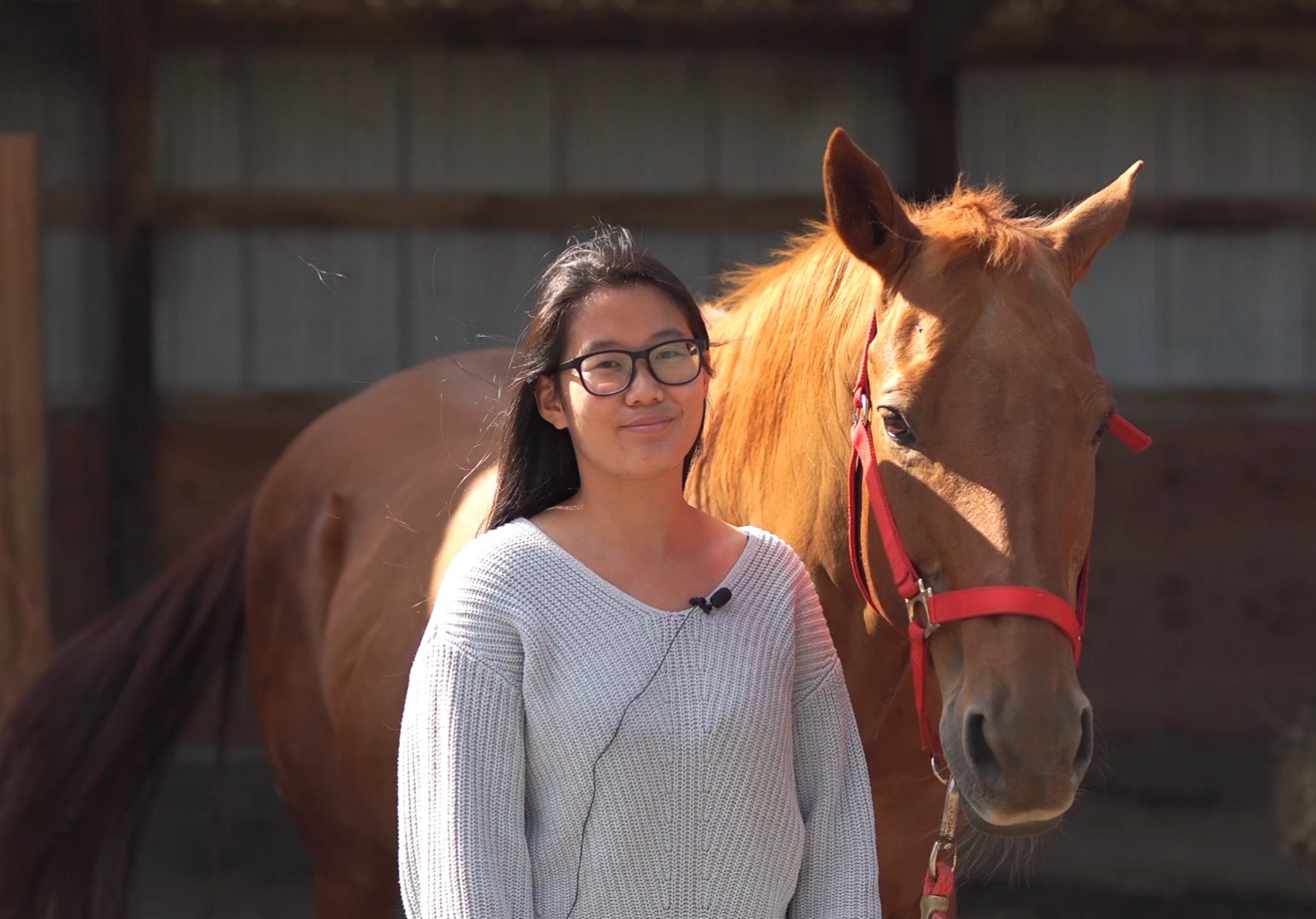
I have never done equine therapy in the same way I have provided such services. I got involved with a non-profit called Animals as Natural Therapy where we provide services specifically to vulnerable populations, veterans, and senior citizens. I started as a mentor in the summer of 2019 and have continued to volunteer there ever since. Equine therapy can come in different forms: sometimes we work one on one with kids or veterans, sometimes we bring the animals to senior citizen homes, and sometimes we take trips to schools. When we work one on one with children we don’t focus on talking about the negative or traumatic events although they can come up during a session based on how a kid is reacting or what they choose to disclose. Before I go more into that, the most common question I get asked is “why do you use horses?” We say that horses are mirrors and they reflect what we truly feel; they see our hearts and not the mistakes we make or the facade we may show the rest of the world; and they will work with a person to be completely honest with themselves. Now going into this I was very skeptical about how a horse could communicate their opinions with us, but I have learned that horses are incredibly expressive animals and we teach those who work with them what different behaviors may indicate. For example, when horses take deep breaths or their leg is resting in a crooked position those both indicate that the horse is relaxed. Horses have their own personalities, but can sense what an individual needs and their personalities accommodate that. Sometimes we have kids who are very timid that often share they get bullied at school, those are the times when horses are more likely to pull their kids to the grass and throughout that week teach them how to be more confident and assertive in their interactions. Horses empower those they work with in different ways.
My own experience and challenging myself:
Working in equine therapy has been life changing for me and has helped me process my own experiences in life. I went in being terrified of horses as I had an accident with one when I was younger and wasn’t familiar with them at all. Within a short span, I have learned to trust them more than I probably do humans. Yes, they are incredibly strong and powerful, but they are so gentle and compassionate with the people they work with. Some of the things I have been able to work on over time include changing my perspective towards death, my self-worth, trusting others, practice and solidify my mindfulness skills, feel supported during an ongoing investigation, destress after school work, patience, and so much more. I’m thankful that even when COVID hit I was able to continue helping in the summer and sporadically throughout the following months. I think similar to everyone else, COVID has arguably made the last year the worst it has ever been for so many people, but the horses and people I work with also made it the best year full of personal growth and I’m incredibly thankful for that.
Tips:
- It is okay to be afraid of horses or to not feel totally comfortable at first
- You will be taught how to do everything and will be paired with either an instructor or mentor who are more familiar with the horses
- You can ask about scholarships to participate in these type of programs
- Whether your sessions last a week or several weeks, so long as you keep an open mind you definitely will come out learning something
Closing:
So therapy may not be for everyone and it does take time to find something that works best for you, but I think everyone should try therapy. There are so many types available in the present day that didn’t exist even a decade ago and many other types have had more research determining their scientific benefits. Although I didn’t go into depth on every type of therapy some of the other common methods you can also look into includes art therapy, general animal therapy, or tele-therapy. Tele-therapy can provide you with confidential services through a live chat or phone call with a licensed counselor typically 24/7 where you can disclose as much or as little as you would like with little to no fees. When COVID hit, the UW invested in a tele-health service for its students and faculty to use free of charge (https://www.washington.edu/counseling/ ) called MySSP. The great thing about tele-health services is you can be anywhere in the world to use them, they are always at the tips of your fingers, and they can help you find additional resources. I hope you enjoyed this series and found it to be helpful for the future.
Group Therapy
I was very skeptical about group therapy as I was an avid one-on-one therapy type person for over a decade. I got into group therapy while attending the UW and have been pleasantly surprised at how easy it can be to share personal events that happened to me with a bunch of strangers. There is a lot of support from peers in having shared experience and having other people vocalize their unconditional support for one another. A major difference between group therapy versus individual therapy is opening the space to allow others to speak and share their experiences. There can be a risk for triggering topics to be brought up by peers, but it is also an open space to express similar feelings, echoing one another, and sharing ideas for how to proceed with challenges. I’m a very extraverted person and social butterfly, that being said with this type of therapy I find it uncomfortable at times as there are moments of silence among everyone that I feel needs to be filled with something. The silence is not necessarily awkward, but it is definitely new and can be shocking for newcomers. One of the main rules in the group I am part of is we don’t give advice to one another and when it is given there is a lot of respect acknowledged that the person may not have asked and can take it if desired. Group therapy is very flexible in that no one is forced to talk or share anything they do not want to, but welcomes people to still listen to others. Group therapy can be tricky to balance depending on the amount of people in said group and ensuring there is enough time for everyone to share who wants to. Just like one-on-one therapy, group therapy is confidential within the group, but you also have a chance to connect with other members and talk outside of the group. This isn’t something for everyone, but I think it is worth giving a shot even if it is just to sit there and listen to other people’s experiences.
What to expect your first visit:
My experience may be different than other people’s as I have only done group therapy with one group. For me I had an initial intake appointment with one of the therapists who leads the group to see if I would be a good fit for the purpose of the group, get to know me as an individual, and go over some of the rules for joining the group. Once I was invited to join the group and attended my first session, everyone introduced themselves and were open to sharing as much or as little as they wanted to about their experience and what brought them to the group. The session then proceeded as it would any other week with check-ins, commentary, and ending with a check-out of what we want to take from the session going into that next week.
Tips:
- Ask questions about the group dynamic
- Group therapy tends to be tailored for a group with some shared experience
- There are moments of silence in between people sharing
- Some schools (such as UW) offer different types of group counseling through the counseling center

Therapy has been one of the many topics that has only become more accepted in our society within the last decade. Similar to mental health issues (including disabilities), seeking any help, speaking up, and just bringing it up in everyday conversation was not a common practice. I started going to therapy in 2006 after I had lost my mom and have continued going for the last fifteen years. Over the years I have been introduced to different theories, techniques, and in different settings all of which have their pros and cons. In the following series of blogs I will discuss my experience and tips when it comes to one-on-one therapy, group therapy, and equine therapy. Therapy of any kind has allowed me to challenge myself and my past beliefs to grow into the person I want to be going forward. Therapy is one of the hardest things and most courageous things to take on because you are taking that time to face problems from your past and present. These blog posts are my own personal thoughts and come from my experiences over the years.
One-on-one therapy
One-on-one therapy is probably the most complex to navigate because there are so many ways you could customize your session to your needs. Therapists are trained to be helpful in pretty much any situation, but a lot of them have specialties which is something you want to be mindful of when looking for a therapist. Some therapists have specialized or additional training for eating disorders, self-harming, family problems, couple therapy, depression, etc. In addition to that, when looking for a therapist you may want to ask what techniques they use since some may approach therapy by focusing on the trauma aspect, reframing thoughts, identifying your emotions (how they feel, what caused them, how to cope), just listening and allowing the client to talk, among other methods. Another thing to keep in mind is whether you want to seek long-term or short-term treatment and the therapist you talk to may have thoughts on that depending what you are seeing them for. I haven’t always had the best therapist for what I needed at the time, but the times that I’ve seen a good therapist it has always been great and the amount of progress is more apparent in my everyday life. I definitely have realized that as we grow, our needs change and sometimes that means seeing other professionals or seeing one for the first time.
What to expect for your first visit:
All therapists will take a new patient intake consultation where they will ask about your history, any medical conditions, previous experience with other mental health professionals, and try to get to know you better. A lot of therapists will ask what your goal is for seeing them, what you might want to accomplish, and what you want to focus on. Lastly, they will discuss a regular schedule with them and choice of payment.
Tips:
- Knowing that a therapist may not work best with what you need and that’s okay to look for a different one
- You can call or arrange to meet the therapist in-person (during non-COVID times) to get a feel of their personality and if you feel comfortable
- There are different types of payment therapists offer i.e. sliding scale (takes your financial situation into consideration) and a lot accept different insurance companies
- Use websites like “Psychology Today” to find therapists, counselors, or psychologists anywhere in the USA
Grace Henneford
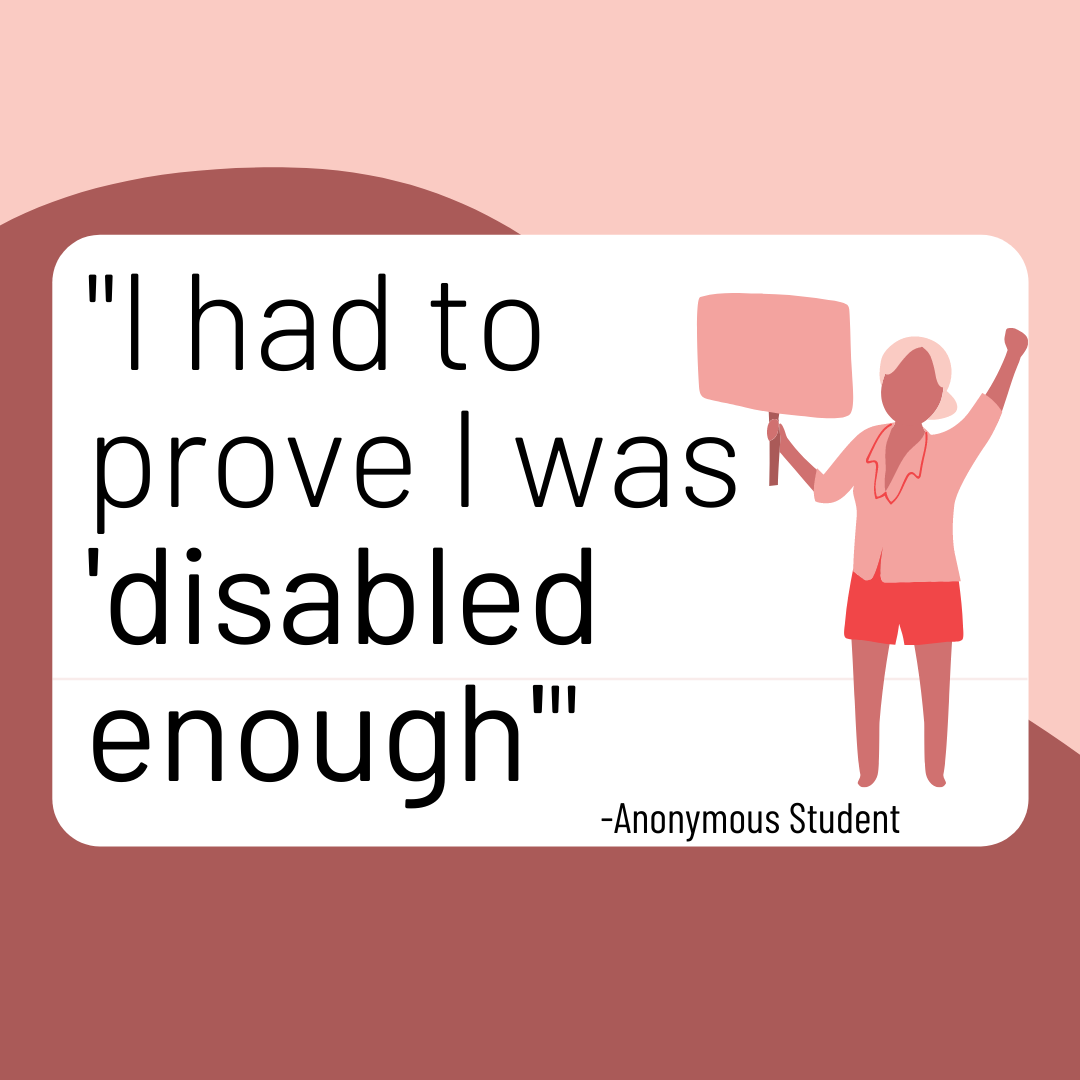
Image Description: “I had to prove I was ‘disabled enough'” -Anonymous Student on a pastel pink background with a woman’s silhouette holding a blank sign.
“As a student at the UW who identifies as disabled, I have been able to access resources and accommodations through the Disability Resources for Students (DRS). I have a lot of thoughts when I hear the term DRS: I think of the way non-disabled students talk about it being an “advantage”, I think of the teachers or faculty who think we are pretending, I think of student staff that I myself along with others have had some unpleasant interactions with, I think of the process for getting said accommodations, and I think above all else the way my identity has been tested in that environment.
Part of getting accommodations is providing paperwork from a professional that explains why and how these accommodations would assist in navigating school as someone with a disability. When I came into college I had severe anxiety that would make it nearly impossible for me to function like a normal human being and it became very suffocating at times. Throughout college and once I had gotten help, I have learned a lot about myself, how to adapt to this disability, how to better manage it, I am on medication under doctor supervision, and so ultimately, I appear ‘normal’ to anyone else. No one would know I have to manage an invisible disability daily, unless I told them.
The second year I came back, I had to get my accommodations approved again in order to utilize them during the year. I found the process the second time around to be more stressful and challenging to my own identity than the first. I was doing a lot better than I had been a year previously, but I had to prove I was ‘disabled enough’ in order to receive accommodations and then have someone else validate that I met some standard. Coming into college I never associated what is considered an invisible disability to be a disability at all so I battled a lot internally with how I wanted to identify myself and what I wanted to be associated with. I found it really challenging then to have other people try to define me and put me into this mold when I knew I was more than just a diagnosis. I am listed as having a temporary disability, but why isn’t there anything to then support students such as myself through this transition? Not every transition is for the better, but for some it is and students shouldn’t just be tossed to the side once their experiences aren’t ‘valid enough to qualify’. Physical disabilities are easier to see than an invisible disability, but people who have one or the other or both struggle with these pre-made assumptions about their disability and how that makes people view them. I find it rather draining to constantly advocate for myself and prove to society that a disability exists, while still wanting people to see me as a person.”
-Anonymous Student
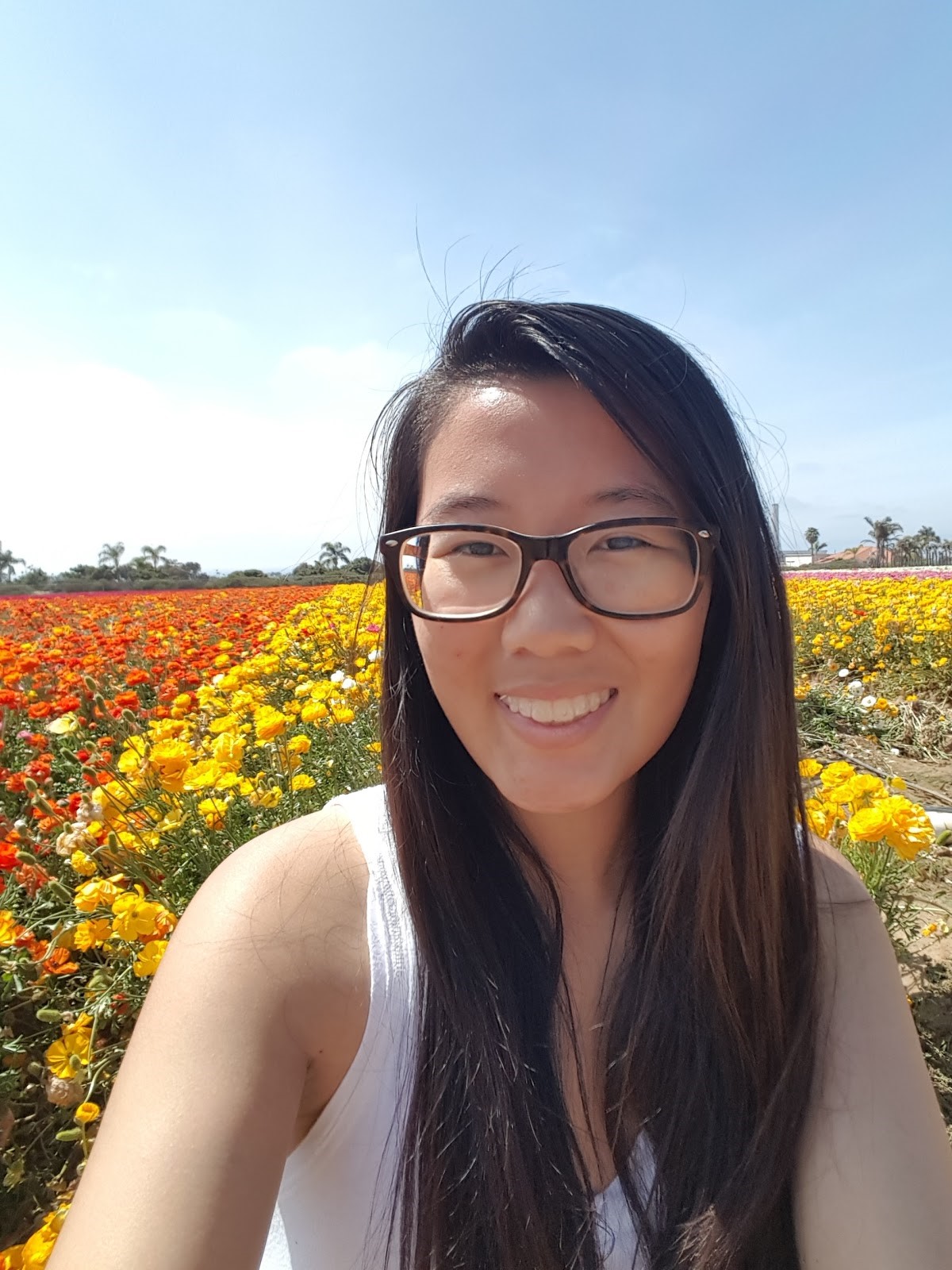
photo of Grace, she has long black hair, and is wearing glasses and white tank top, smiling with orange and yellow flowers behind her and a clear blue sky
Grace Henneford
UW Graduating Class 2021
Disability Studies
How was your experience of having an invisible disability in school?
I actually struggled the most with my disability in high school, it had been undiagnosed and I wasn’t even aware that accommodations or laws protecting individuals with disabilities existed. I’ve always struggled with feeling like people cared about me and in high school when you’re still so young living with an invisible disability that not many people are familiar with past a textbook definition, I definitely stood out in a lot of ways. People wouldn’t understand why I might need reassurance, or why I was worried about something that any “normal” person wouldn’t be, or why I had to reach out to some of my teachers so much. People just assumed I was needy, a handful, weird, a teacher’s pet in high school; and because we didn’t have open discussions about mental health or disabilities it weighed heavily on me. I was finally diagnosed the summer after I had graduated actually and was finally able to get the help I needed after seven months. I have always been one to advocate for myself and others especially when it came to mental health, which is a huge part I’m studying what I am.
“People just assumed I was needy, a handful, weird, a teacher’s pet in high school; and because we didn’t have open discussions about mental health or disabilities it weighed heavily on me.”
What made you interested in working at the D Center?
I actually became friends with the people who used to work in the D Center the year before me and they told me about the opportunities they had and I thought it was super cool that they were working towards providing an inclusive space. I had met a lot of people just hanging out in the D Center and wanted to continue that, but also give back in a bigger way.
“With the unforeseen circumstances this spring we definitely had to be creative in how we set-up a space, but it has only opened our eyes to connecting in other ways throughout the year.”
What is your position at the D Center?
I am the office manager for the D Center and my roles entails maintaining a safe and clean space, welcoming people into the center, being knowledgeable about our resources, and helping my co-workers where I can. I’m looking forward to returning in the Fall and bringing the community together whether virtually, in person, or both. With the unforeseen circumstances this spring we definitely had to be creative in how we set-up a space, but it has only opened our eyes to connecting in other ways throughout the year.
How do you balance coursework with family and other commitments during the pandemic?
While being at home, my dad has been super understanding of the situation and knows that I still have daily school work that I have to do so he’s pretty laid back about having me do anything at home. In order to balance or even finish coursework, I have to take a lot of breaks. I’m not someone who can sit for an hour straight and listen to a lecture let alone three. Therefore google calendar has become my best friend where I have created a daily schedule to stay organized and stay up to speed with my classes. Since being at home, I have found myself needing to take a lot more time to myself than I normally would need, but have also discovered and gotten a chance to practice more self-care in my everyday life.
“Since being at home, I have found myself needing to take a lot more time to myself than I normally would need.”
How are you feeling in regards to graduation?
Although I am not graduating this spring, I am projected to graduate almost a year early. Therefore, I have definitely had to take time to evaluate my options and figure out if or when I would want to go to graduate school to get my masters. Graduation seems so far away, but it’s crazy how quickly it sneaks up on you and how I already have to look at programs. I have a lot to think about including my own health, but the ever changing situation in the world definitely plays a part in when I would want to pursue my degree.
“Graduation seems so far away, but it’s crazy how quickly it sneaks up on you and how I already have to look at programs.”
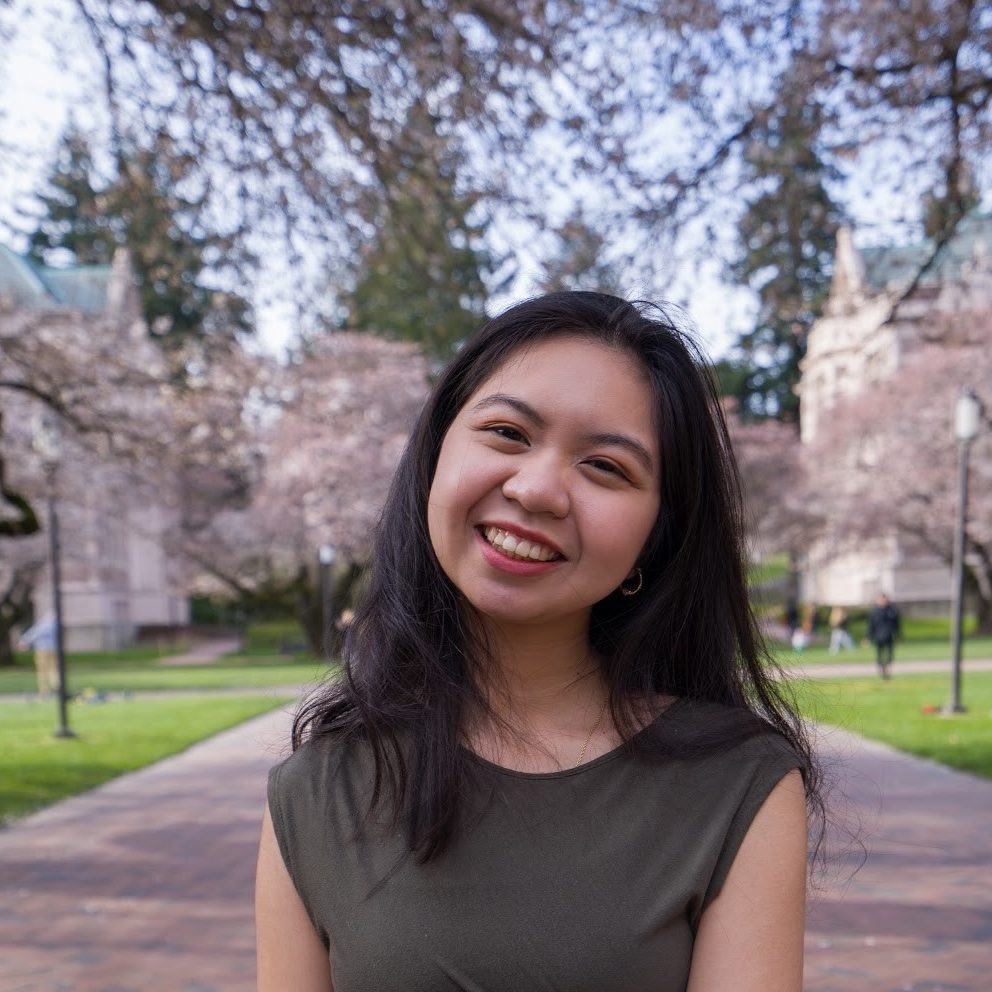
Image description: a photo of Lorie she has short dark brown hair wearing a green dress. Her head is tilted to the right smiling with her hands in front of her. She is standing behind pink cherry blossoms, green grass, and sidewalk bricks in the background.
Lorie Zullo
UW Graduating Class 2020
Early Childhood & Family Studies
What was your experience as a child with a disability in school?
As a person born in the Philippines with cerebral palsy, my parents couldn’t afford the proper care and therapy I needed to maintain my developmental growth. My family decided to move to the United States to not only have a better life, but also find opportunities to have proper healthcare for me as I grew. Over time, I began doing physical and occupational therapy weekly. Every day was a new learning experience; and it was in school where I felt most safe and supported by my teachers, and I utilized my Individual Education Plan (Info on IEP) to attend school. I started to admire the adaptable work teachers and counselors made and the care they showed towards me and their other students. They inspired me to pursue a career in education.
“I was bullied by how I processed my own thinking in various subject matters and ridiculed for how I walked with a slight limp in my right side of the body.”
However, school was not always a positive environment. When I was transfered to a new school in junior high I saw and experienced the discrimination and stigma students had toward my disability. I was bullied by how I processed my thinking in various subject matters and ridiculed for how I walked with a slight limp in my right side of the body. There were multiple inaccessible areas for wheelchair use, no extra time to do testing, and special education did not seem to be a priority for the school administration. These experiences led me to feel frustrated and wanting to pursue a career in the education field so I could challenge these attitudes and bring awareness to disability rights in the school system.
What is your role at the D Center?
I’m the outreach coordinator for the D Center. I get to reach out to organizations and departments in the University of Washington and also find known activists to present on various issues at our planned events. In addition, I get the chance to greet, welcome, and interact with new and old students/members as they come in and out of the D Center space, when we were open of course!
“The D Center is currently hosting office hours virtually. This allows the community to hang out, communicate about school, life under COVID-19 and disability issues.”
How is the D Center creating community despite COVID-19?
As a D Center staff member, we have been posting multiple events happening virtually and adding resources for our community through our social media pages. In addition, we are currently hosting office hours virtually. This allows the community to hang out, communicate about school, life under COVID-19 and disability issues. It is a free form to chat about anything and everything on your mind.
“I try to make sure that I don’t beat myself up for not accomplishing everything on the list.”
How do you balance coursework with family and other commitments during the pandemic?
I’m currently at home with family in Tacoma and have been adjusting to remote learning. During the weekends, my parents and I go out for a walk around the neighborhood as much as we can. Every day is a different challenge; there are days where I’m more productive than another. However, as often as I can I write down tasks for the following day and create a daily routine. I try to make sure that I don’t beat myself up for not accomplishing everything on the list. This reminds me to take good care of myself. I spread my classwork within the week and make sure I rest when I need to. During this time, I’ve been exploring new activities such as cooking and drawing. I also revisited journaling and writing poetry. This pandemic can be stressful at times, but I know with a little self-care and community we can make it through this together.